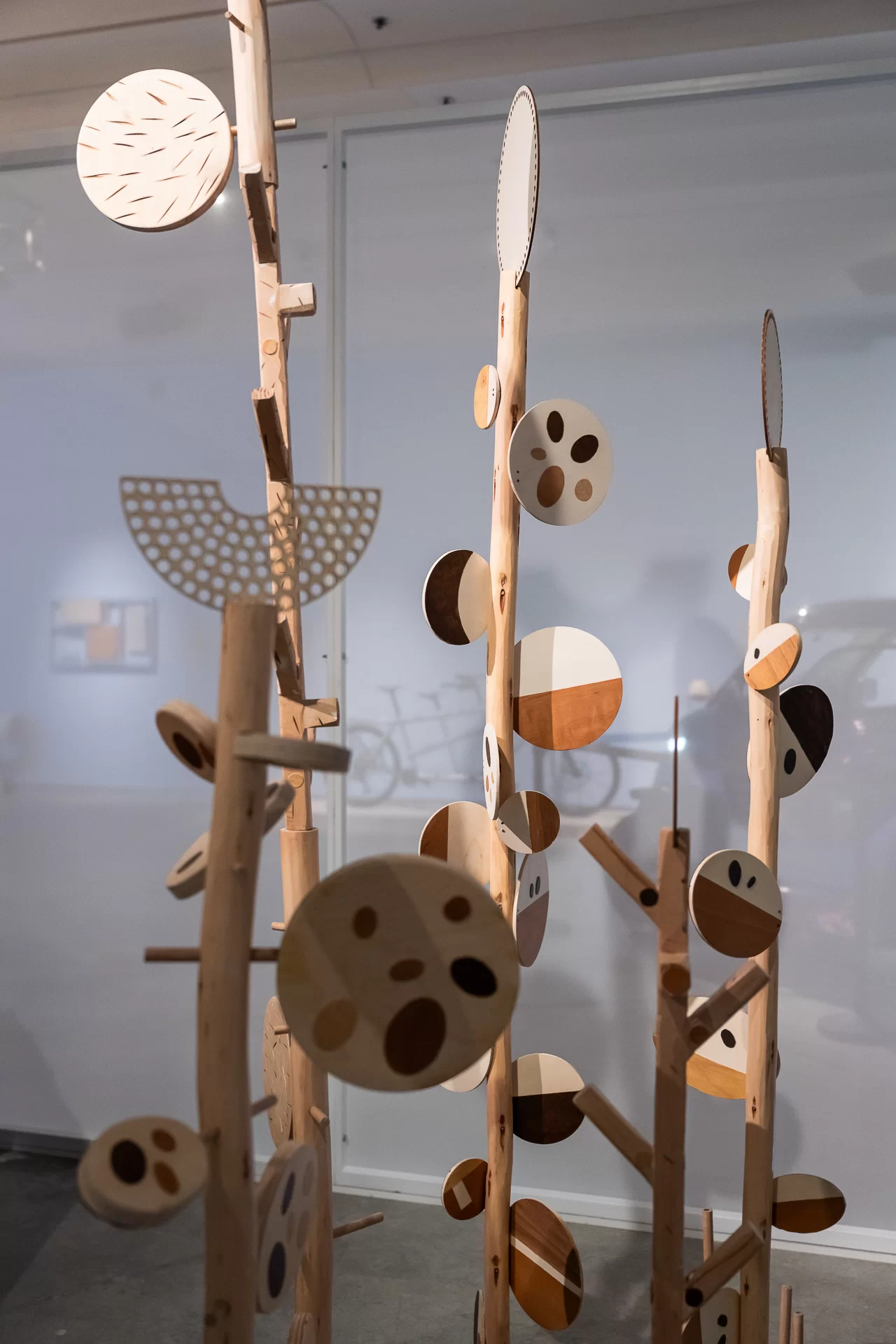
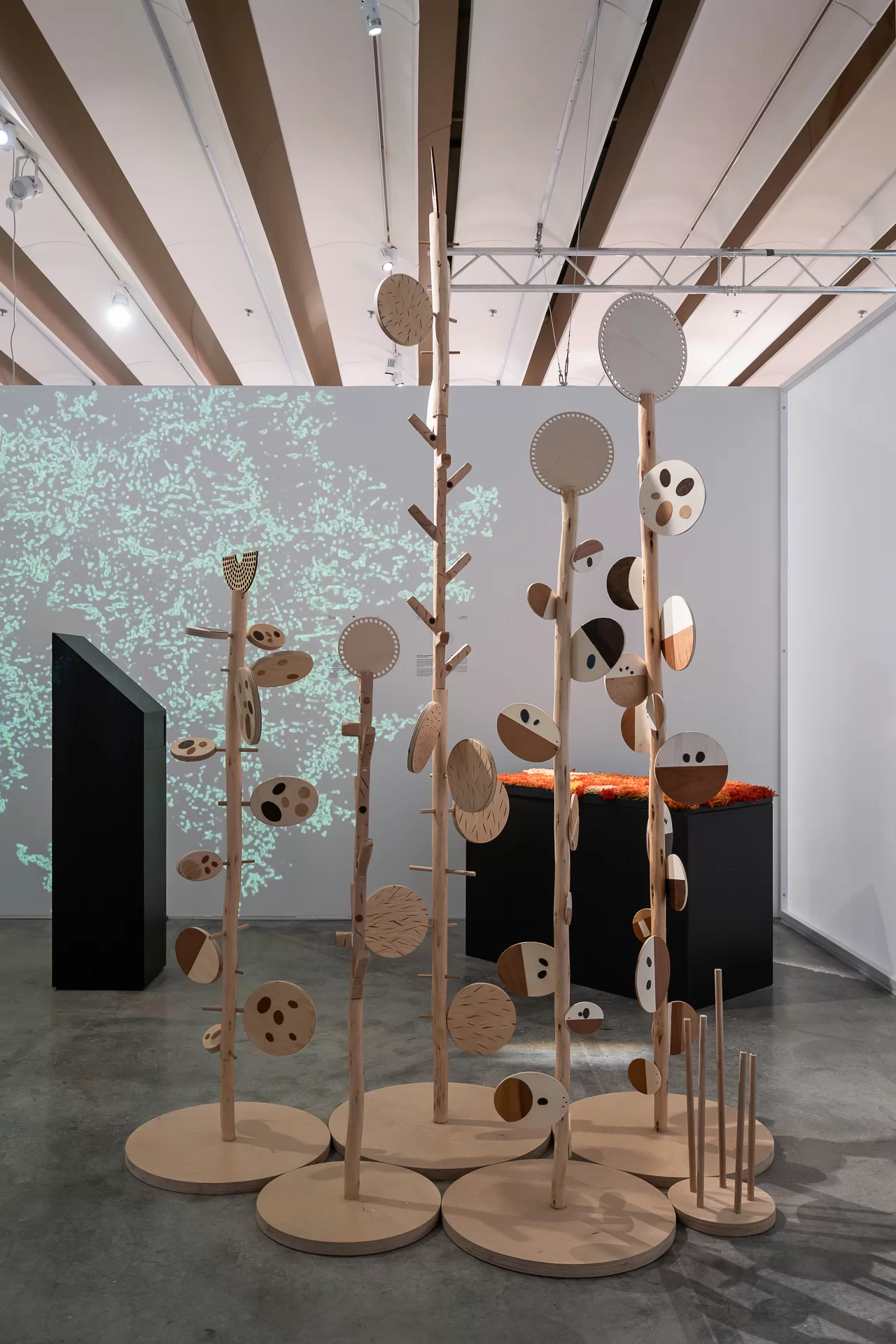
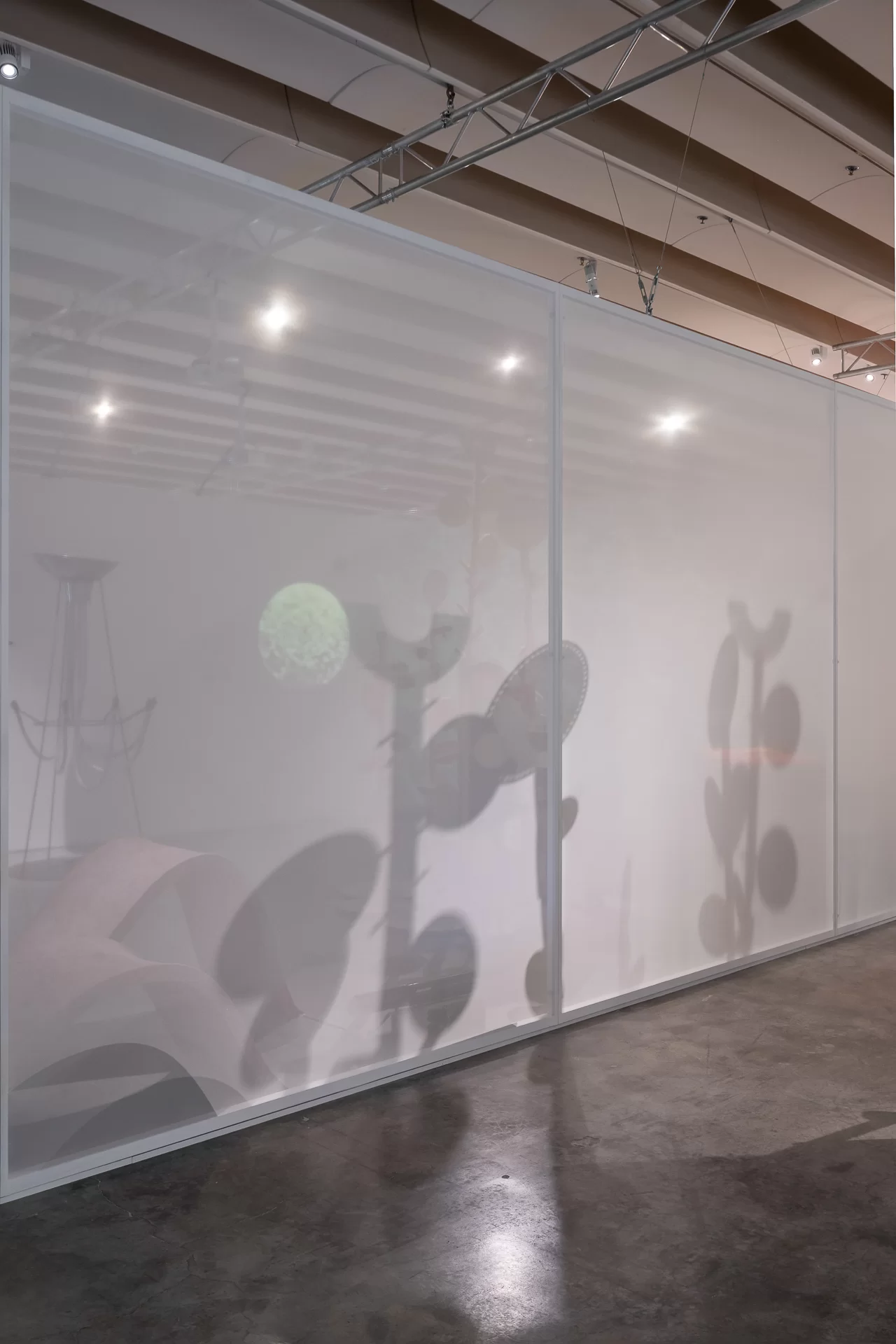
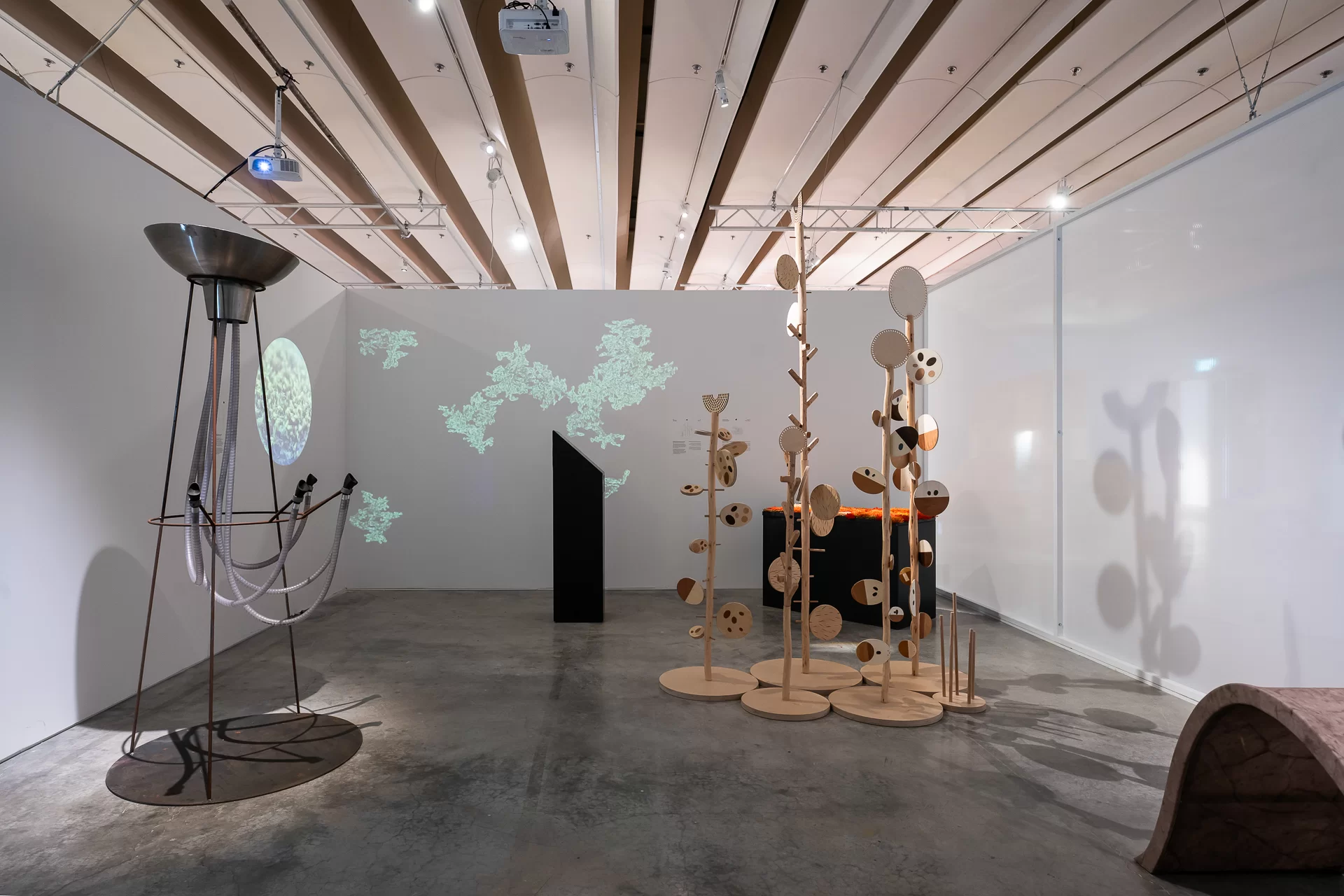
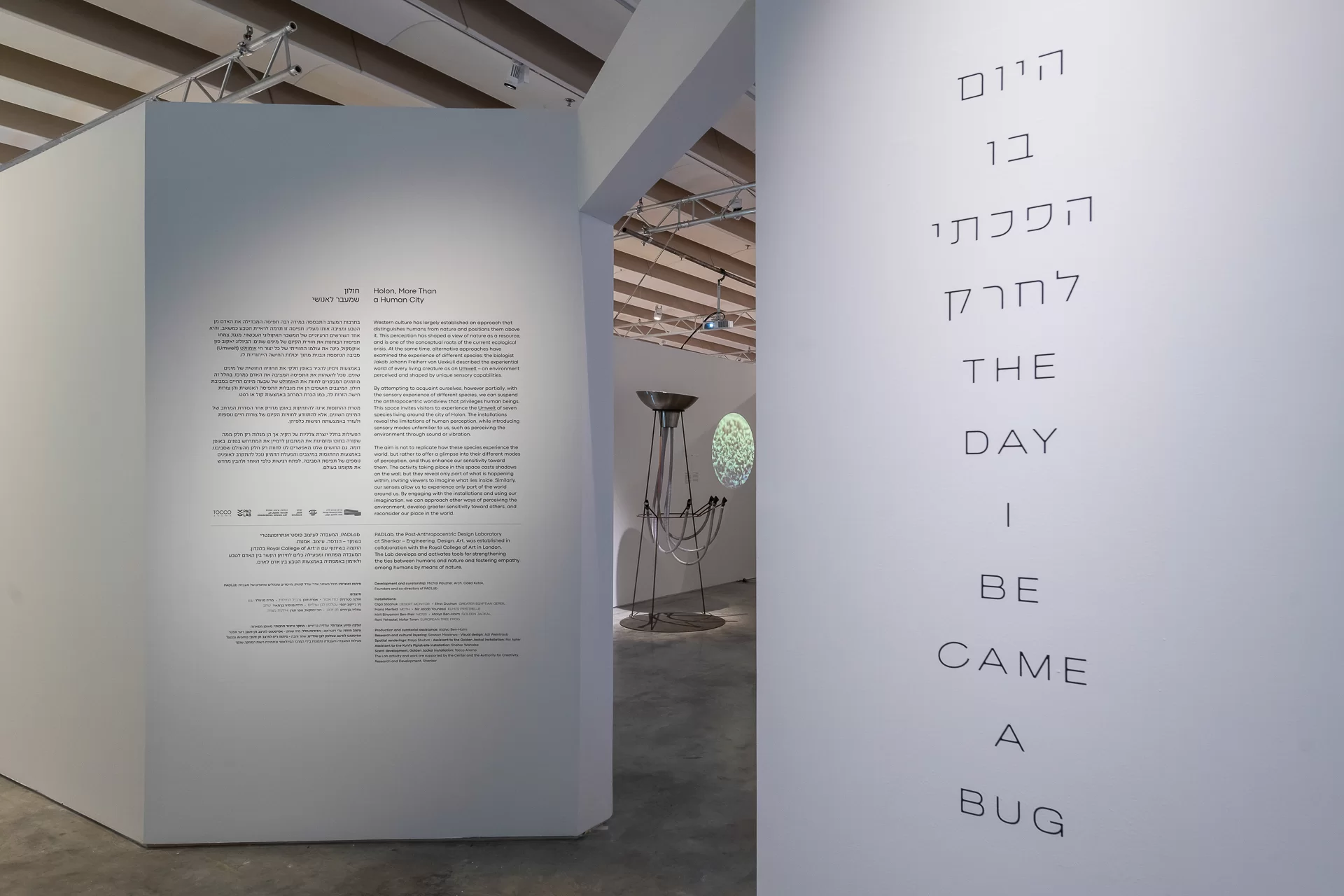
1 / Moth – the work was displayed in the exhibition – The Day I Became a Bug – More-Than-Human
Presented as part of The Circle exhibition at the Design Museum Holon, offers ways to temporarily suspend the perception that separates humans from nature. In a unique space, seven interactive experiences simulate how local species living in Holon sense and perceive their surroundings. The experience invites us to think of the city not only as a city for humans, but as a shared habitat for multiple species.
PADLab, the Post-Anthropocentric Design Laboratory at Shenkar.
Development and curation: Michal Pauzner, Arch. Oded Kutok
Leading curatos: Talia Janover and Lior Hermoni
2 / Metropolis TLV – The work was displayed in the exhibition -“Life, Plant, City: 100 years of Geddes”
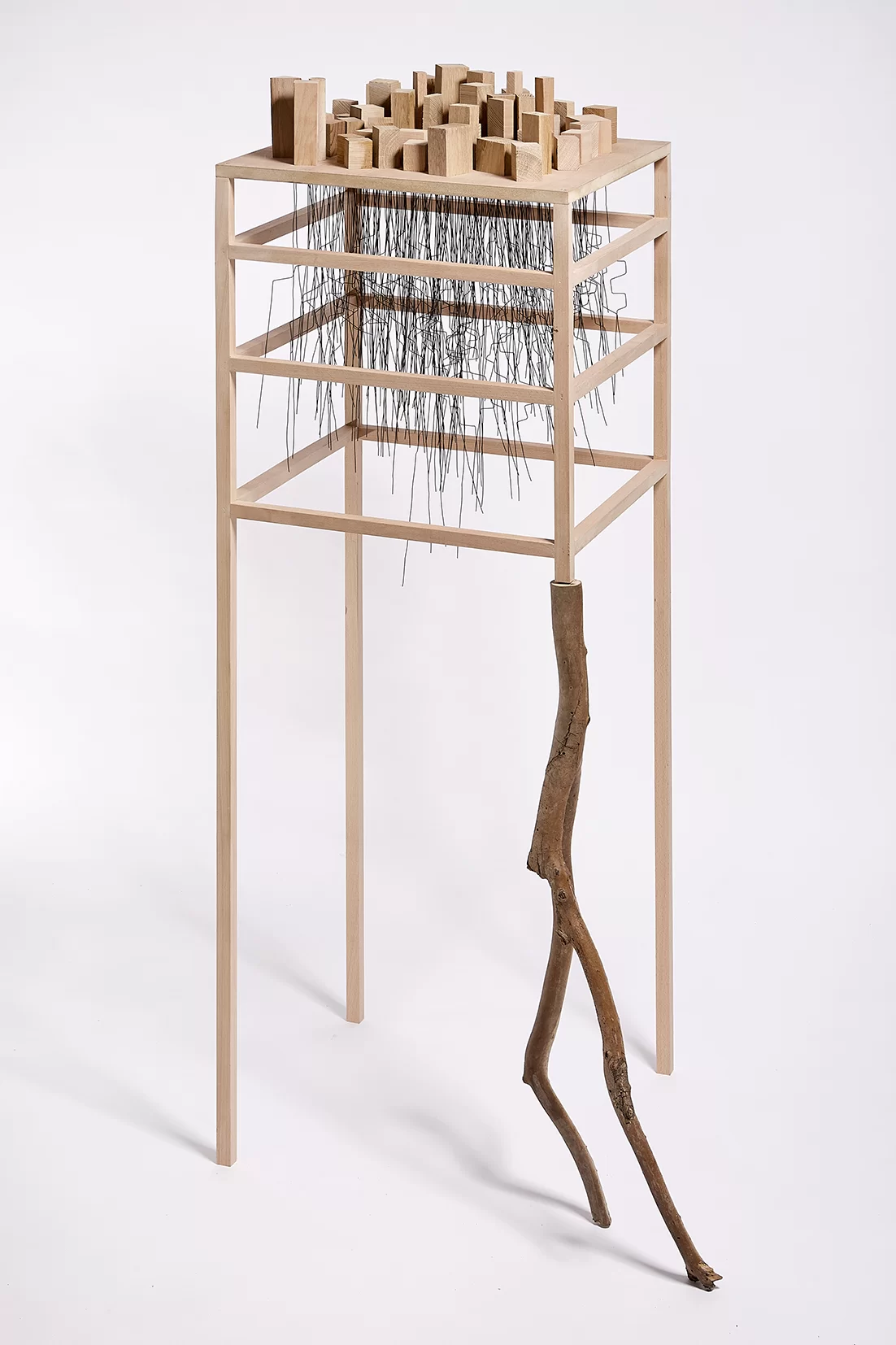
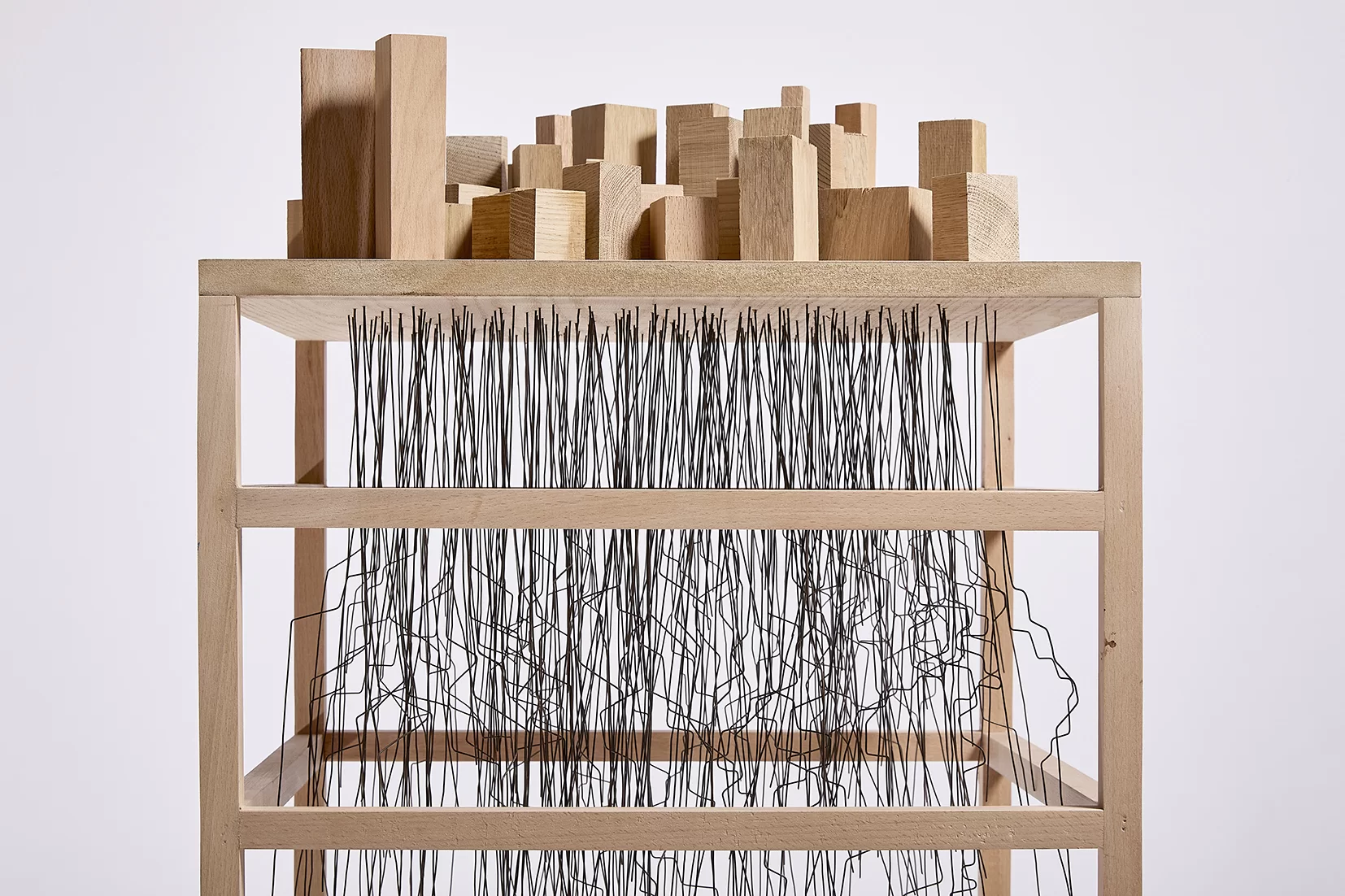
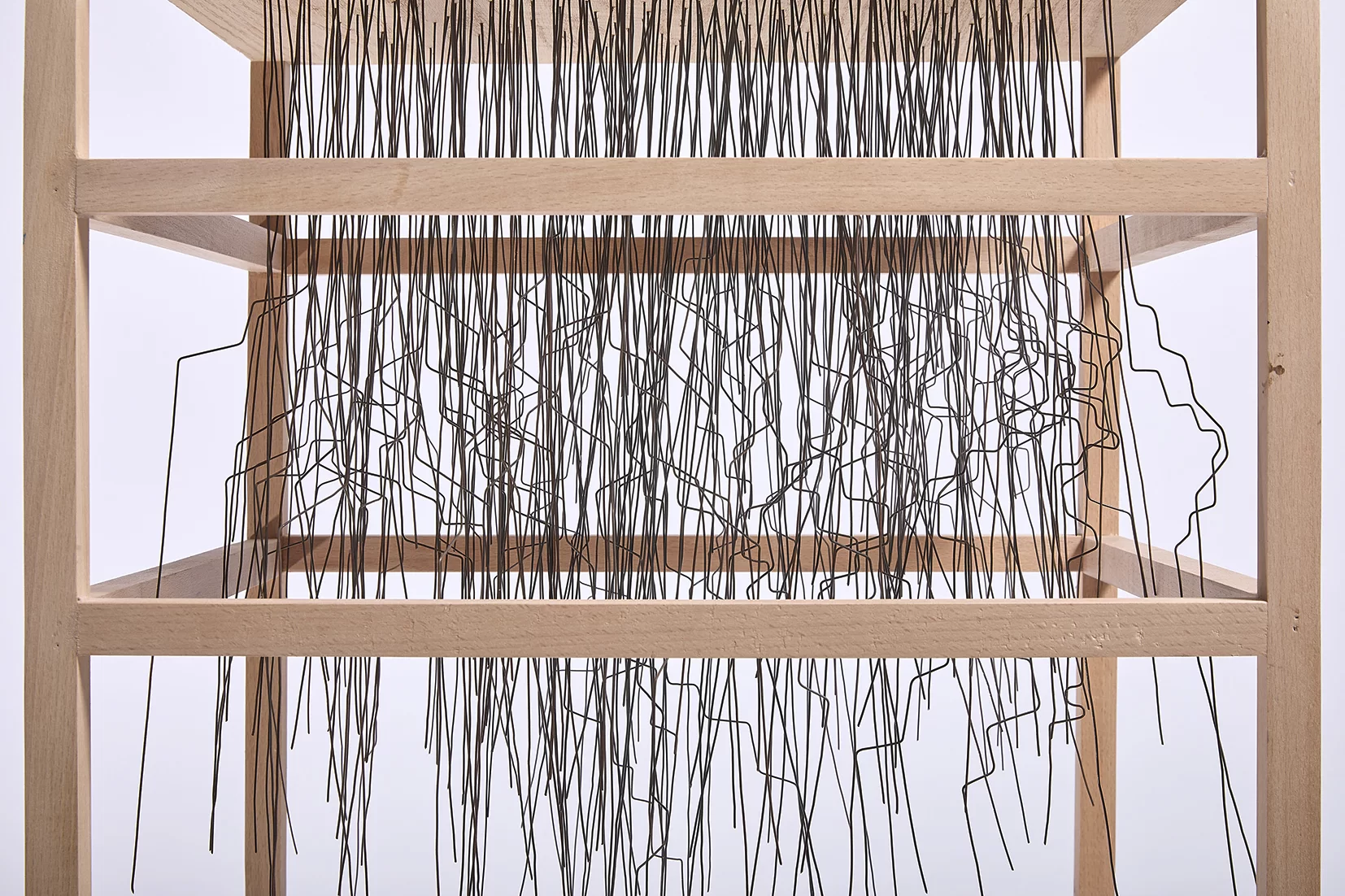
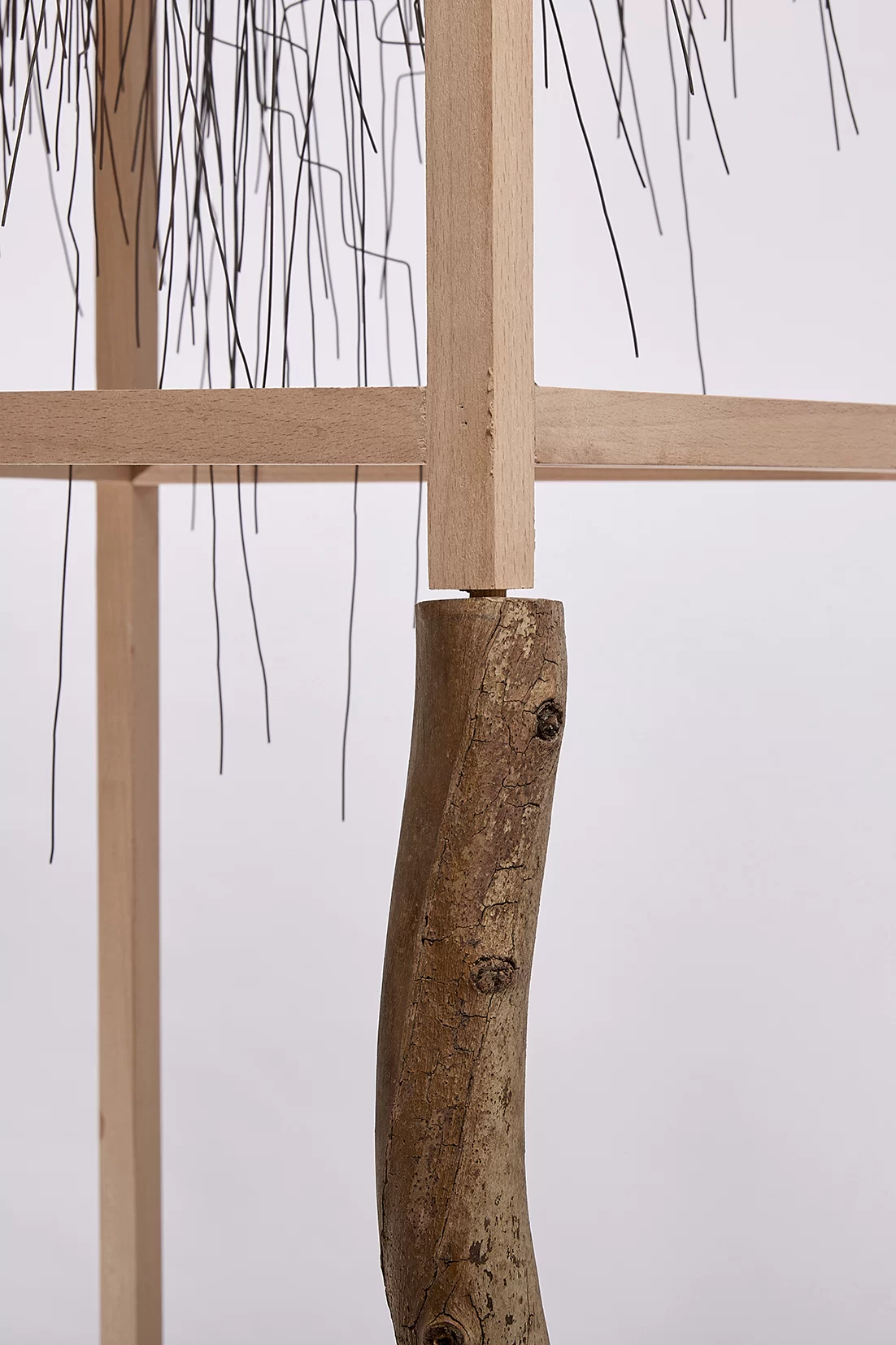
A structure-like object composed of layers. The work presents a cross-section of a city divided into two worlds: the urban layer above ground and the one beneath it. This cross-section is positioned at the viewer’s eye level (150 cm).
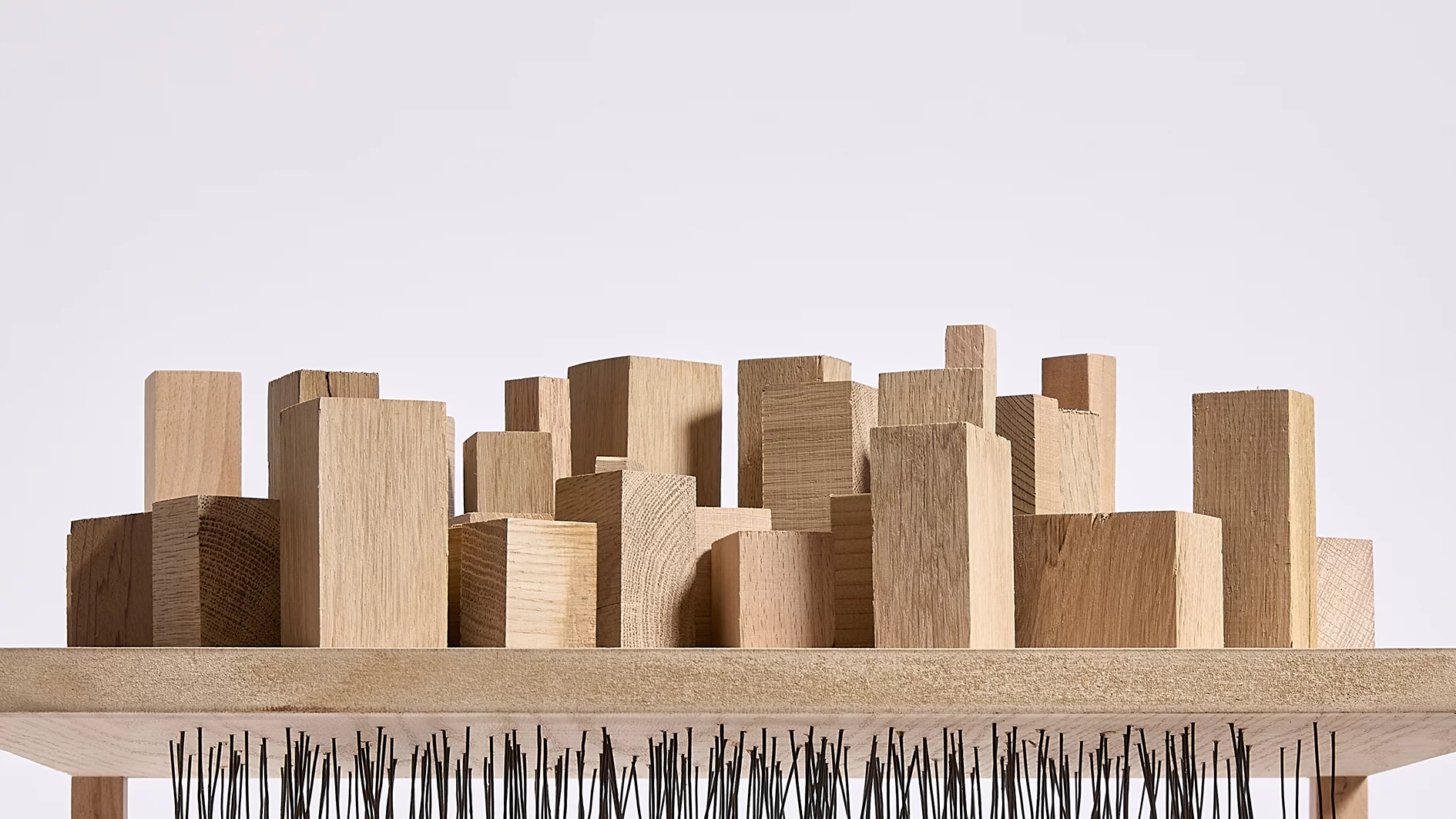
Above ground, pieces of processed wood, cut to varying lengths and thicknesses, are arranged. The underground layer features a tangle of iron wires representing what might have been tree roots; instead, they depict building foundations in an endless, chaotic web—a concept I have taken a step further to reflect the total disappearance of the “block gardens.” The two layers form a direct continuation of one another.
This is a critical perspective addressing the encroachment upon and reduction of green spaces, the rapid pace of high-rise construction at the expense of those “Geddes Plan” garden gems, and the fantasy of life within a holistic urban block.
Patrick Geddes (1854–1932), a biologist, botanist, landscape theorist, sociologist, urban planner, and, in essence, a multidisciplinary thinker, is regarded as one of the pioneers of modern planning. Geddes viewed the city as a living fabric where society, nature, environment, and culture are interconnected, with planning serving to achieve harmony between human needs and their surroundings. In the early 1920s, Tel Aviv’s Mayor, Meir Dizengoff, invited Geddes to create the city’s first master plan. Approved in 1925, the plan established the city’s identity as a modern garden city, featuring shaded streets, wide boulevards, squares, and public gardens. Unlike Geddes’ other city plans around the world, this detailed, visionary document was almost fully realized and profoundly shaped Tel Aviv’s character and planning discourse throughout the country. A hundred years later, Geddes’ vision remains highly relevant in addressing current issues of sustainability, society, and public space.
The exhibition explores Patrick Geddes’ planning and social vision through the building’s unique structure. Designed to reflect the character of each floor and accommodate the daily activities within, the building itself exemplifies the realization of the garden city housing concept. It functions as both a vertical and horizontal cross-section, allowing visitors to understand Geddes’ ideas through history and research, contemporary interpretations in Tel Aviv and worldwide, and reflection on the city’s future.
Curators and Design – Shira Levy Benyemini and Arch. Limor Yossifon-Goldman
Senior Researcher – Dr. Arch. Catherine Rochant
3 / ManiFan -the work was displayed in the exhibition – “Craft and Leisure”
I discovered the unique pleating workshop operating beneath my studio when I stumbled upon a massive pile of paper pleats near the building’s trash bin. They were delicate, yet simultaneously sturdy and flexible. The Govrin family workshop—which has been producing custom pleats in soft fabrics for three generations—is currently run by its 80-year-old owner, and its future remains uncertain. Pleating is considered a craft too niche and specialized to warrant an entire workshop dedicated solely to it; yet, there is magic in this supreme skill—a craft preserved by only a few in our fast-paced, hyper-productive, and excess-saturated era. I recognize the pleats created in the workshop in beach umbrellas, pleated skirts, and the fans that unfurl during the heat of the day, as well as in the works of Yaacov Agam displayed in the city’s public spaces.
“Manifan” plays with the tension between concealment and revelation, between exposing family craft secrets and internalizing them, employing a variety of techniques ranging from sculpture to illustration, and from painting to weaving. The pleat motif is deconstructed, distorted, magnified, and expanded, transforming into a kind of towering, breathing totem—its base rooted in the floor while its top hovers near the ceiling. From an aesthetic element intended to increase the range of movement across the fabric and reinforce the soft material, the fold transforms into a rich historical embodiment of vanishing knowledge and tradition.
curators: Galit Gaon & Hadasa Cohen